

在錢幣還沒有發明之前,“以物易物”是最古老的做生意的方法,大家把不需要的東西拿到市集裡去交換自己所需要的,人類以此方式沿用了很久的一段時間,不過這種用物品換物品的方式,也有很多不便的地方, 起初,具有高價值的小物件可用來做交易,可能是珠子,貝殼,較特殊的石頭,或是金屬塊之類的物品,後來人們就以金屬鑄造出代表物價的東西, 所以錢幣的發明也是讓社會進入文明的重要貢獻之一。
在中國最早使用的錢就是貝殼,開始於石器時代後期到商朝(西元前1675-1029年),逐漸演變成以玉石、獸骨和青銅所製成的貝幣,後來在西周(西元前1100-771年)和春秋戰國時代(西元前770-221年)又有以青銅、赤銅或黃銅製成扁平狀的布幣和刀幣,也有龜殼做的龜幣,不過市面上貨幣流通的種類、大小、形狀不一, 到秦始皇時才真正統一幣制,下令只能以金和銅的金屬鑄造貨幣,這便是在說文解字裡有提到“古者貨貝而寶龜,周而有泉,至秦廢貝行錢”。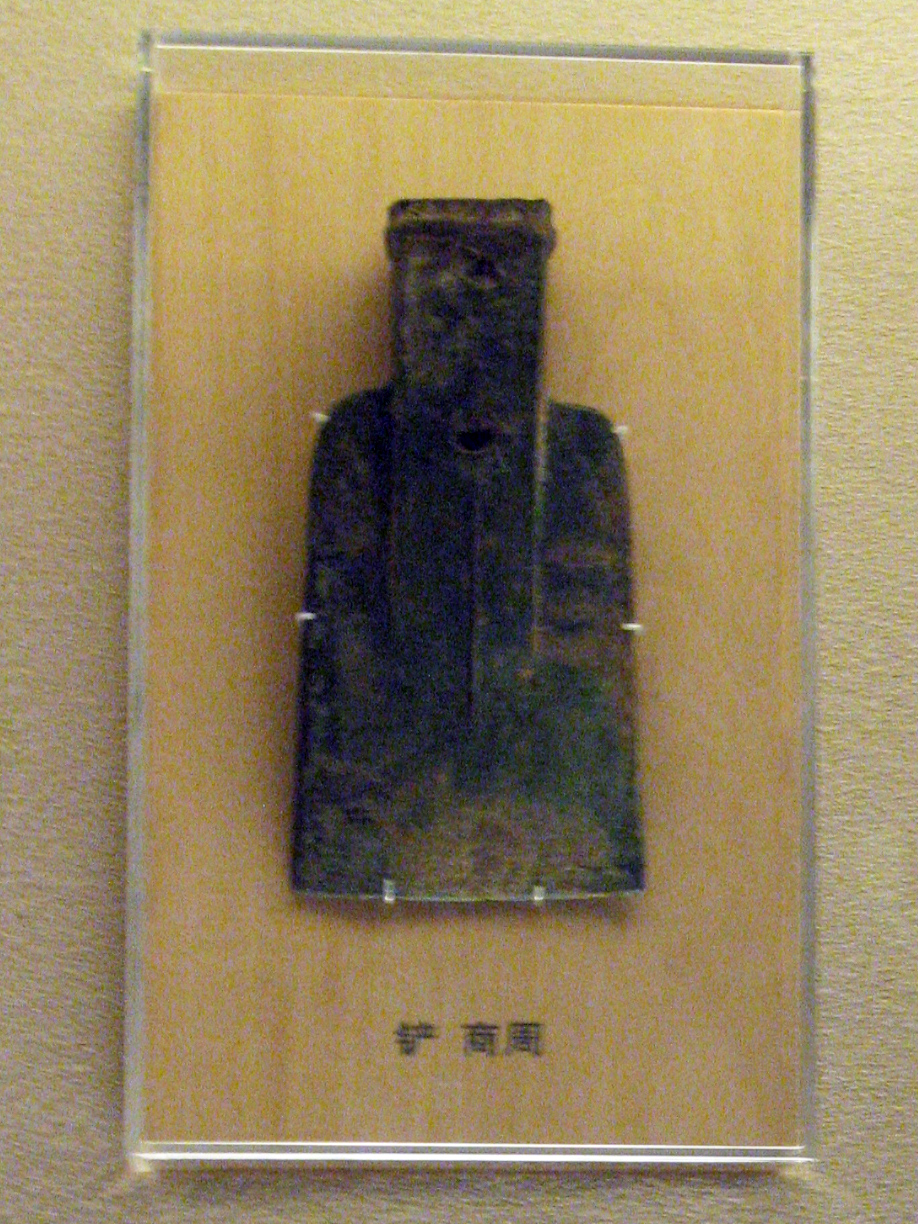
商周時期:鏟子形狀的布錢
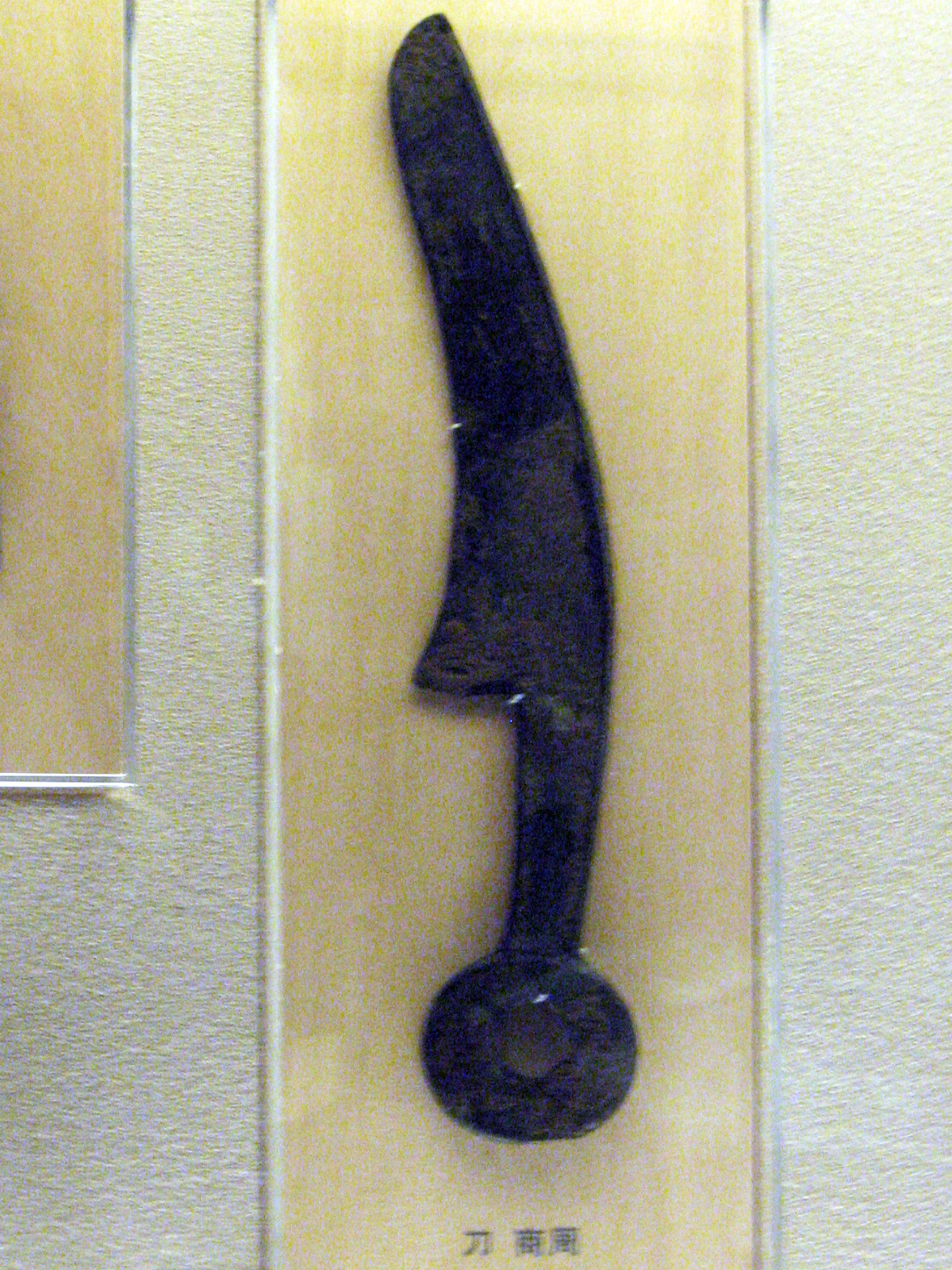
商周時期:刀子形狀的刀錢
世界上出現最早的硬幣並不是西元前220-200年的秦國銅幣,因為西元前610年的利底亞(屬於希臘的一個城邦,現今的土耳其)早就已經開始鑄造錢幣了。雖然中國在西元前1050年,比較肯定的說法是在西元前7世紀(這一世紀的利底亞是鑄幣創作的領先者),已經有代表貨幣,形如鏟子和刀子的扁平金屬,而不是我們所認知的圓形硬幣。在西元621年,唐朝官方開始鑄造銅錢叫做通寶,這個名稱一直沿用到清朝,在西元785年的唐朝發展出一種票券叫做飛錢,因票券的質量非常的輕盈,如不小心就有被風吹走之虞,故得其名。飛錢不是紙鈔,遠行的商人只需要把銀兩在辦事處兌換成票券,並把存款收據的票根拿到另一指定地點,便可兌換成貨幣。
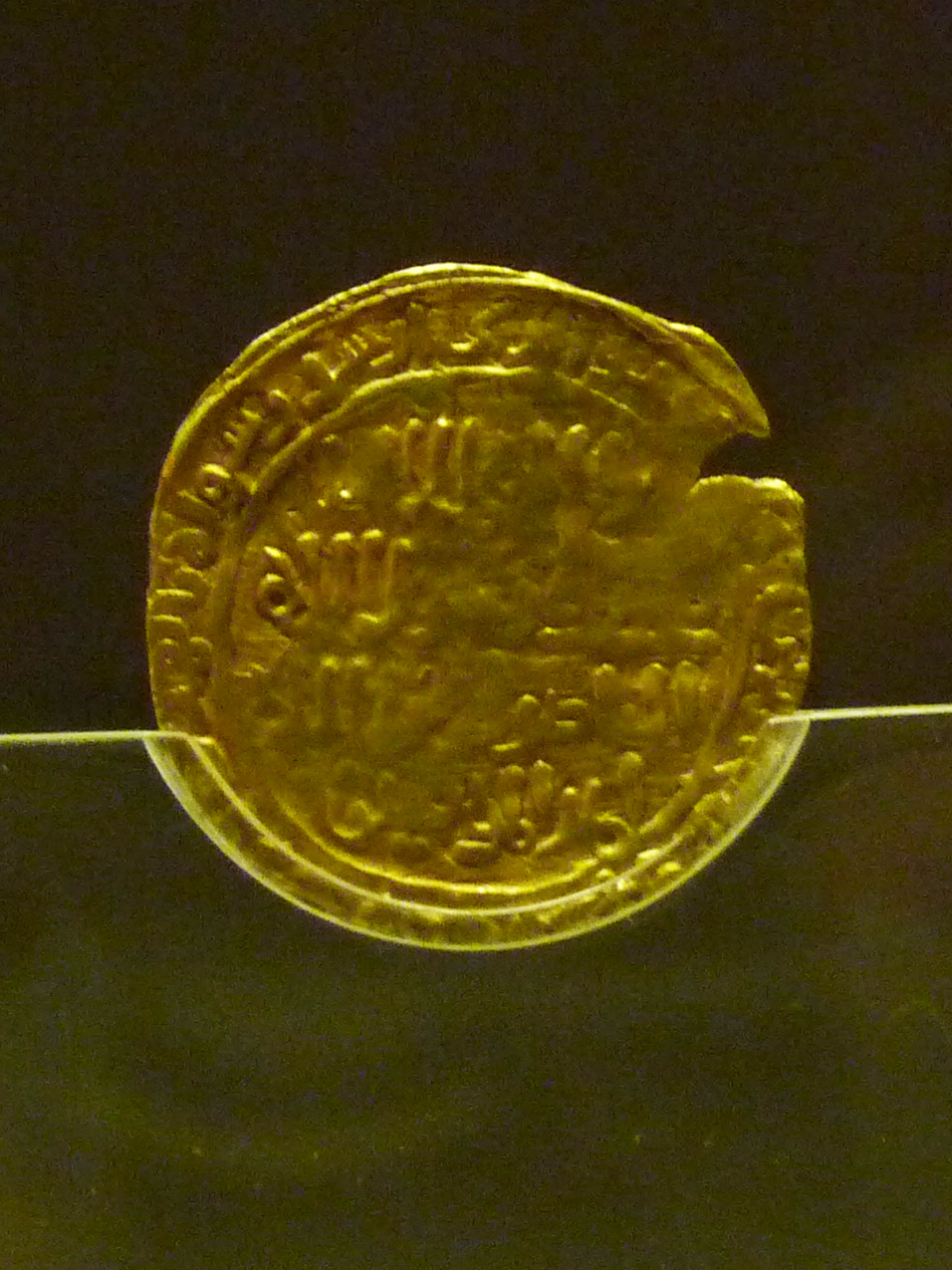
成吉思汗時期的金幣
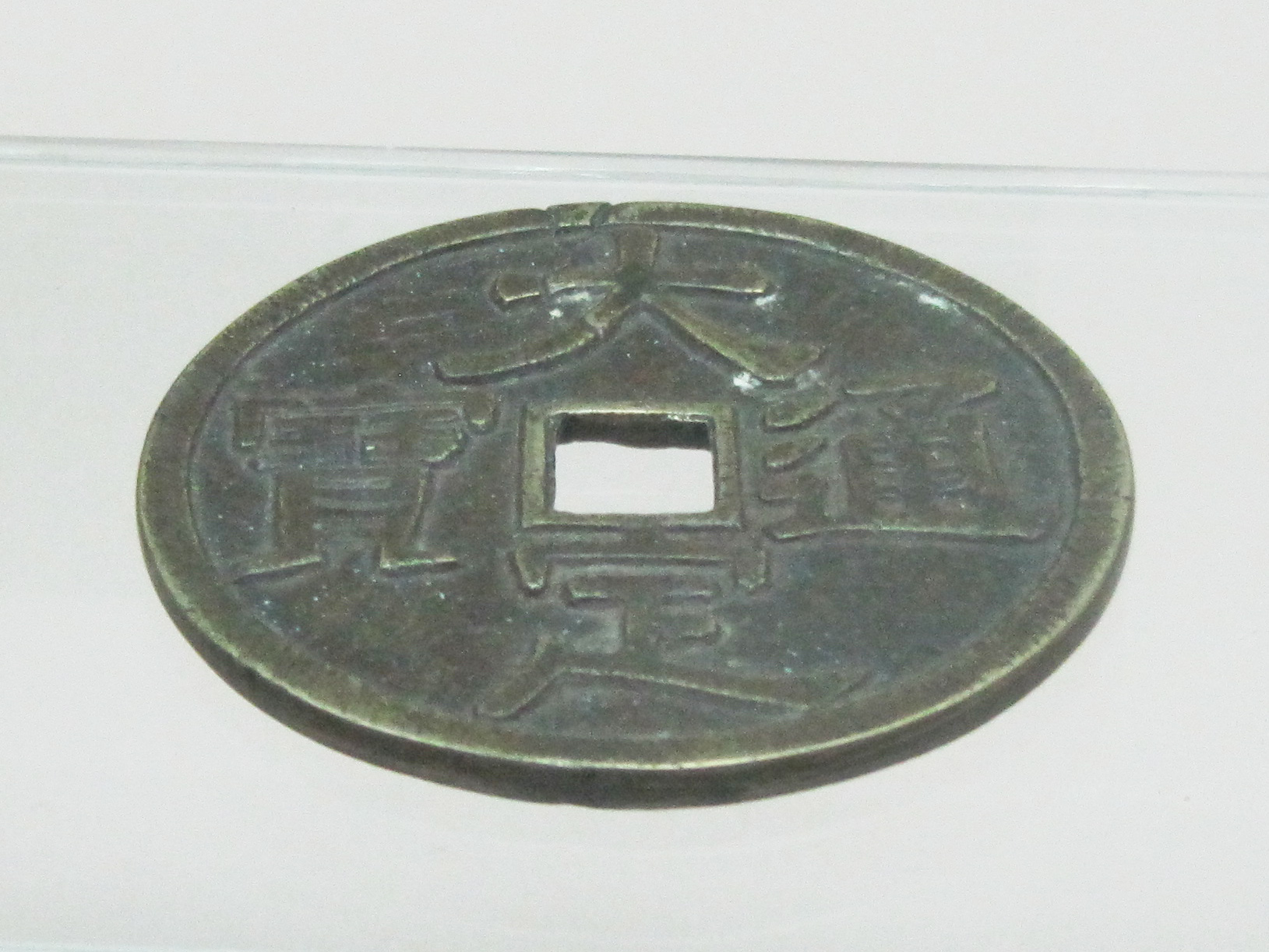
金“大定通寶”
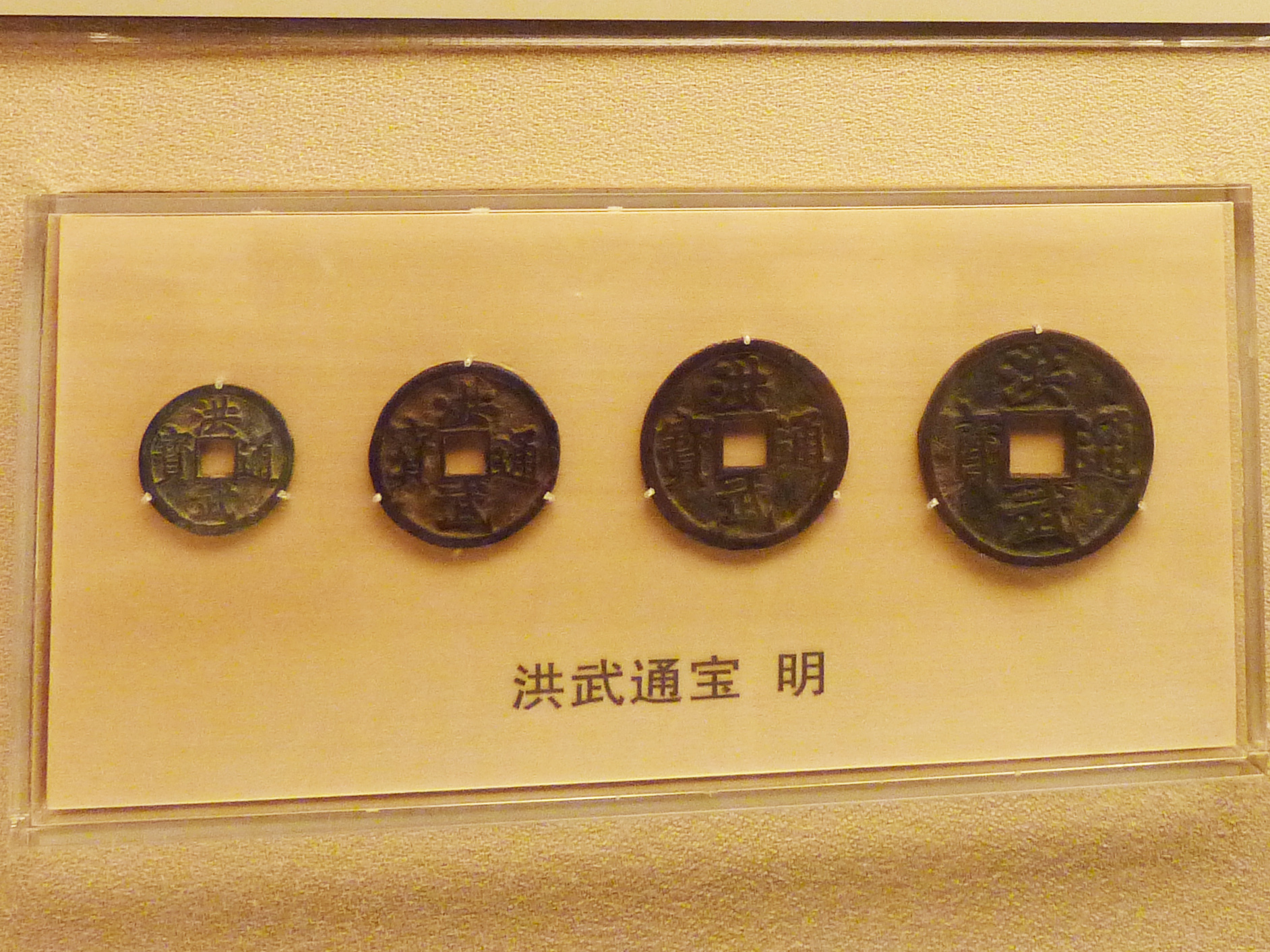
明“洪武通寶”
 金“銀錠”,銀錠是以重量來計算價值
因為造紙業和印刷業在北宋時期(西元960-1127年)已經迅速發展,促使商業貿易繁榮,中國有了最早(西元1011年)也是全世界最早發行的紙幣叫做“交子”,一交等於銅錢一千文。最先在四川一帶由“富民十六戶主”發行使用,這些商人在紙鈔上暗藏標記,以此代替鐵錢,當時“交子”的使用也促使了“交子舖”的設置,交子舖就像現今的銀行一樣,專門為商人保管現鈔,並可從中收取一定的保管費用。 西元1023年發行的紙幣(實際上是由南宋官方發行的貨幣),在當時算是一種創新,不過早在10世紀初期(開始於四川)就出現了由私人企業發行的紙幣。馬可波羅從中國返回歐洲時曾經寫了一篇有關紙幣的文章,但是當時並未被引進歐洲,直到瑞典在西元1601年開始才有紙幣的印製。
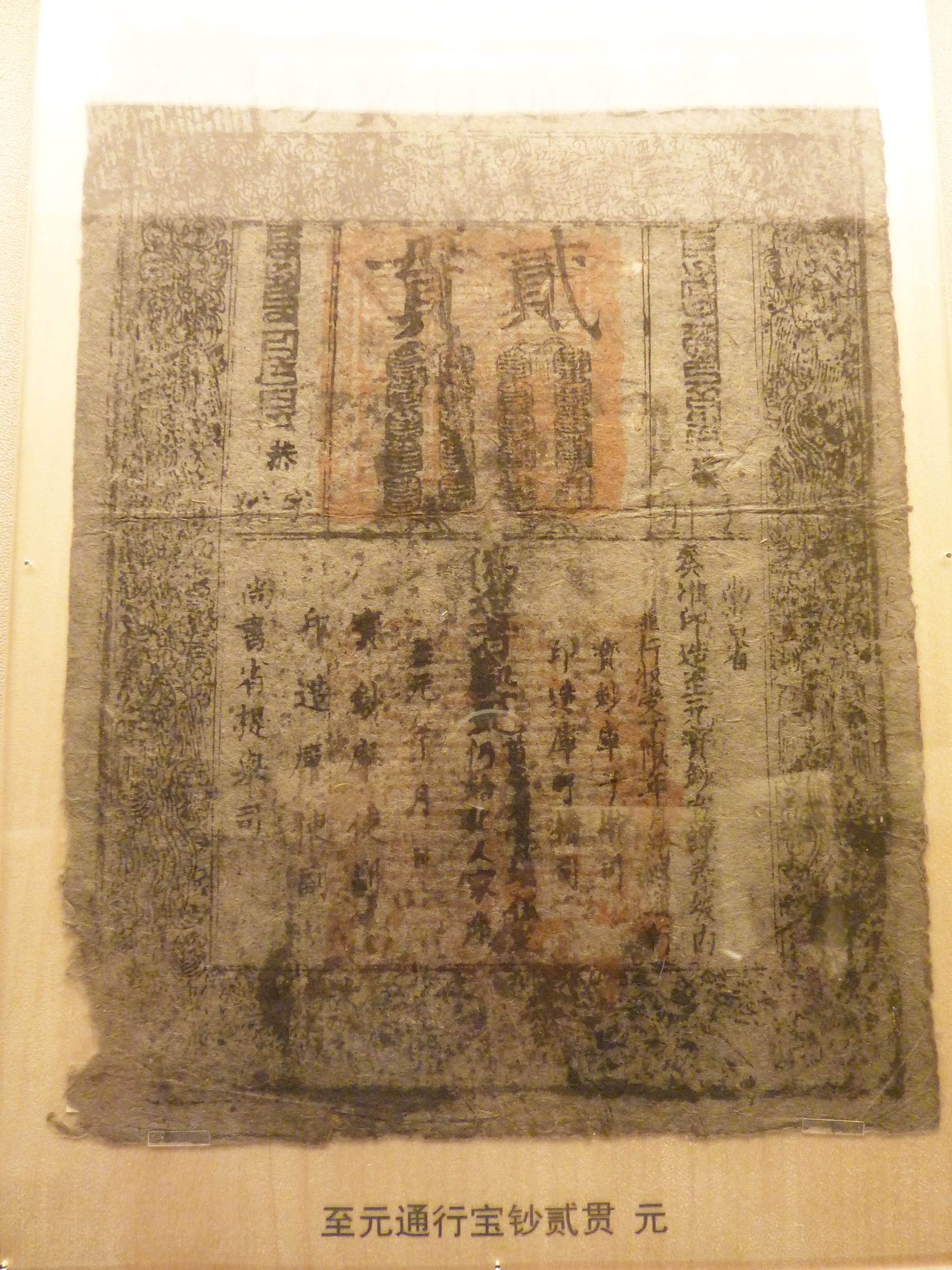
元朝至元年間發行的通行寶鈔
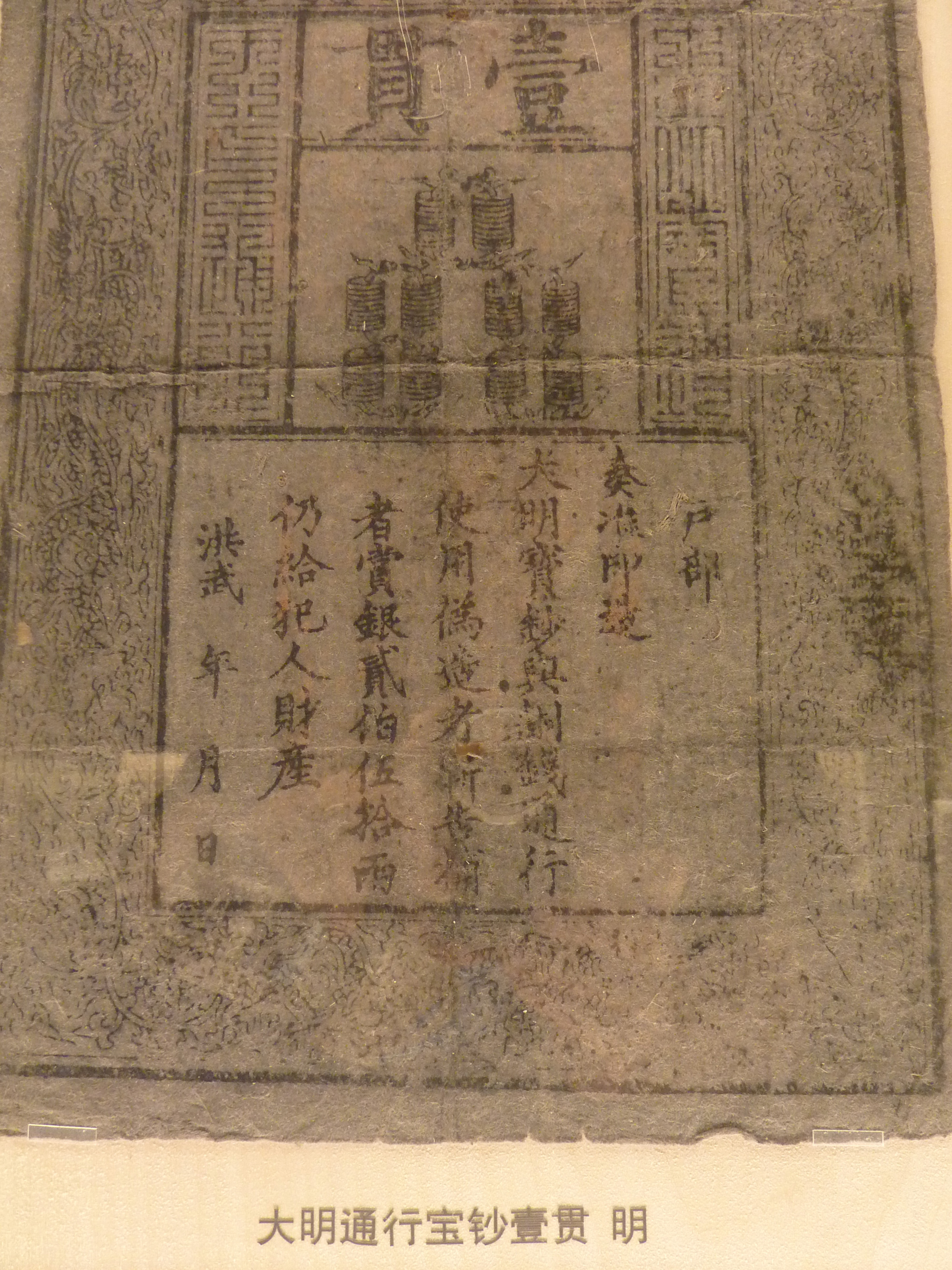
明朝洪武年間發行的通行寶鈔
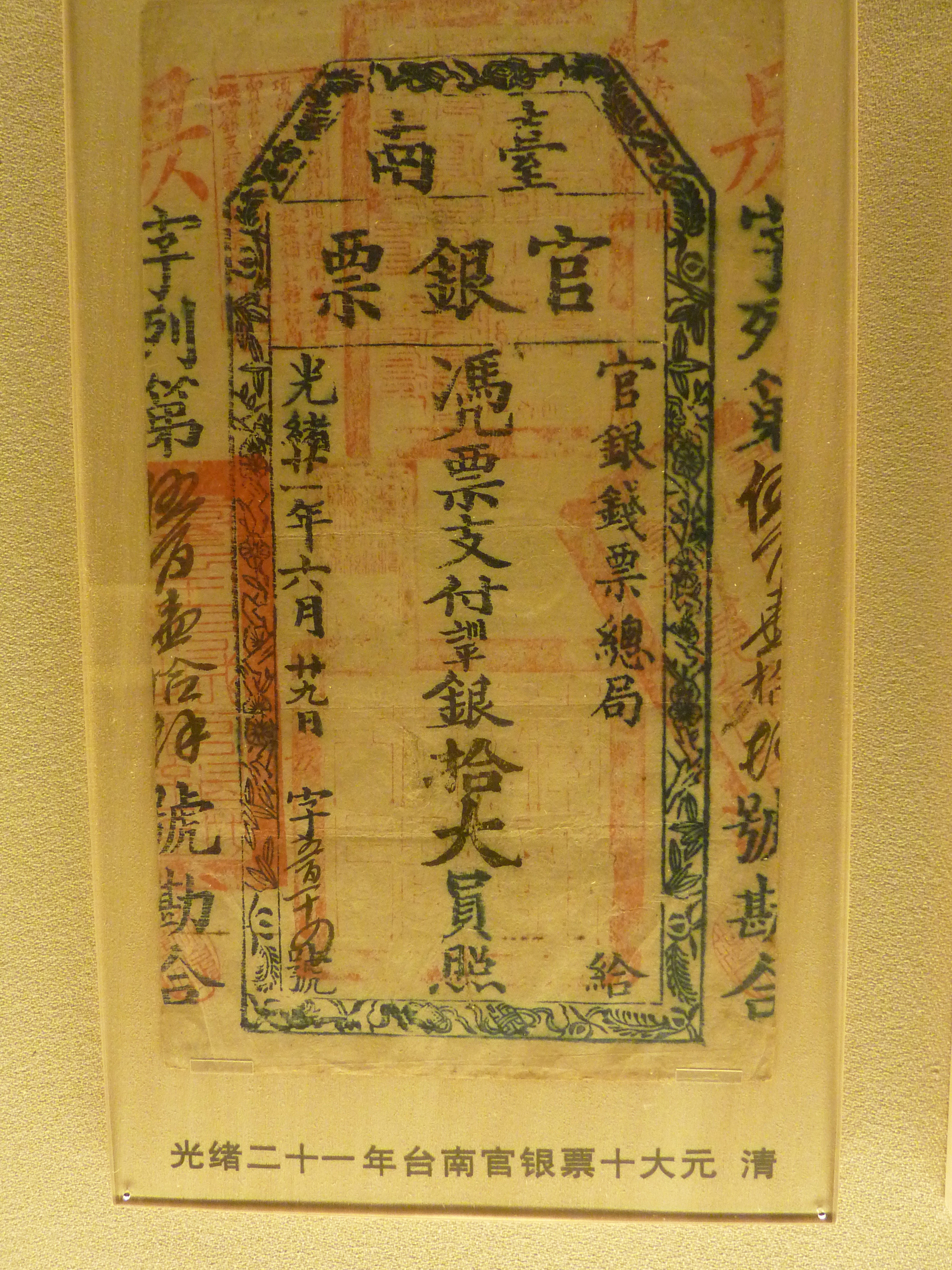
清光緒年間發行的銀票
|
|
相關連結
- The NOVA documentary television program in the United states mentions the year 806 as the first year for paper currency in their history of money page.
- The Computersmiths have a page about the history of paper money in China.
- The National Numismatic Collection suggests that the Chinese may have had paper money as early as the seventh century, but such a date is not widely recognized by the authorities we've consulted.
1. Valerie Hansen's The Open Empire: A History of China to 1600 (published in New York by W. W. Norton in 2000) has a discussion of early banking and currency developments on pages 261-272. You can use Worldcat.org to search for this book in English or in a Chinese version.
